Clear sight and moral courage
Ibrahim and the Idols
إبراهيم
Ibrahim questions inherited worship and stands before his people without surrendering his conviction.
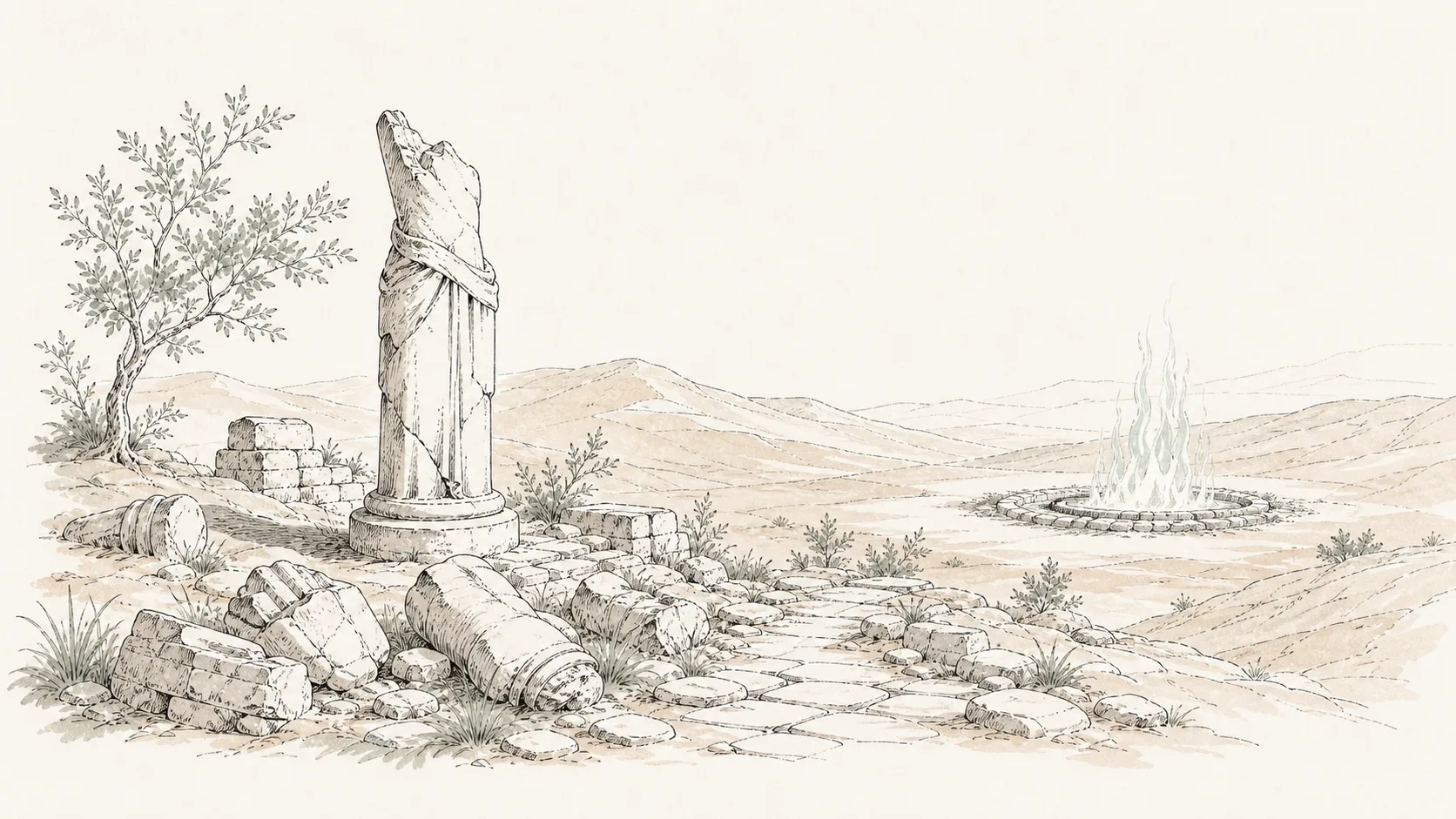
Ibrahim reasons with his people about heavenly bodies that rise and set, turning attention from created things to their Creator. He challenges the worship of idols that cannot speak or benefit anyone.
After the idols are broken, the people confront him. His argument exposes their contradiction, yet they choose punishment over reflection. Allah commands the fire to become cool and safe for Ibrahim.
Quran-grounded account
Follow the cited narrative
Looking beyond what sets
Ibrahim challenges the worship practiced by his father and his people. The Quran presents his reasoning through the signs of the night sky: a star appears and then sets, the moon rises and then disappears, and the sun seems greater but also passes away. Ibrahim rejects devotion to what is created, changeable, and absent. He turns himself toward the Creator of the heavens and the earth, refusing to associate created things with Allah.
Questions about the idols
The people remain devoted to statues. Ibrahim asks what these images are and later why they worship what can neither benefit nor harm them. Their answer rests on inheritance: they found their ancestors doing the same. When the people go away, Ibrahim breaks the smaller idols, leaving the largest one.
A truth they already know
Brought before the crowd, Ibrahim directs them to ask the surviving idol if it can speak. They turn to themselves and say that they are the wrongdoers. Then they reverse themselves and insist that Ibrahim knows the idols cannot speak. He asks why they worship, apart from Allah, what can neither benefit nor harm them.
The fire made safe
The people respond by calling for Ibrahim to be burned in defence of their gods. Allah commands the fire to become coolness and safety for Ibrahim. The plot intended to destroy him fails, and those who plotted against him are made the greater losers.
Three moments to notice
Follow the movement
- The skyTemporary lights point beyond themselves.
- The questionIbrahim asks the people to face what their idols cannot do.
- The fireA sentence meant to silence him becomes a sign of rescue.
Editorial reflection
A question the story leaves open
The story presents faith as attention, reasoning, and courage together—not inherited habit or impulsive defiance.