Calling, fear, and trust
Musa in the Sacred Valley
موسى
A fire seen on a journey becomes the place where Musa receives a difficult calling.
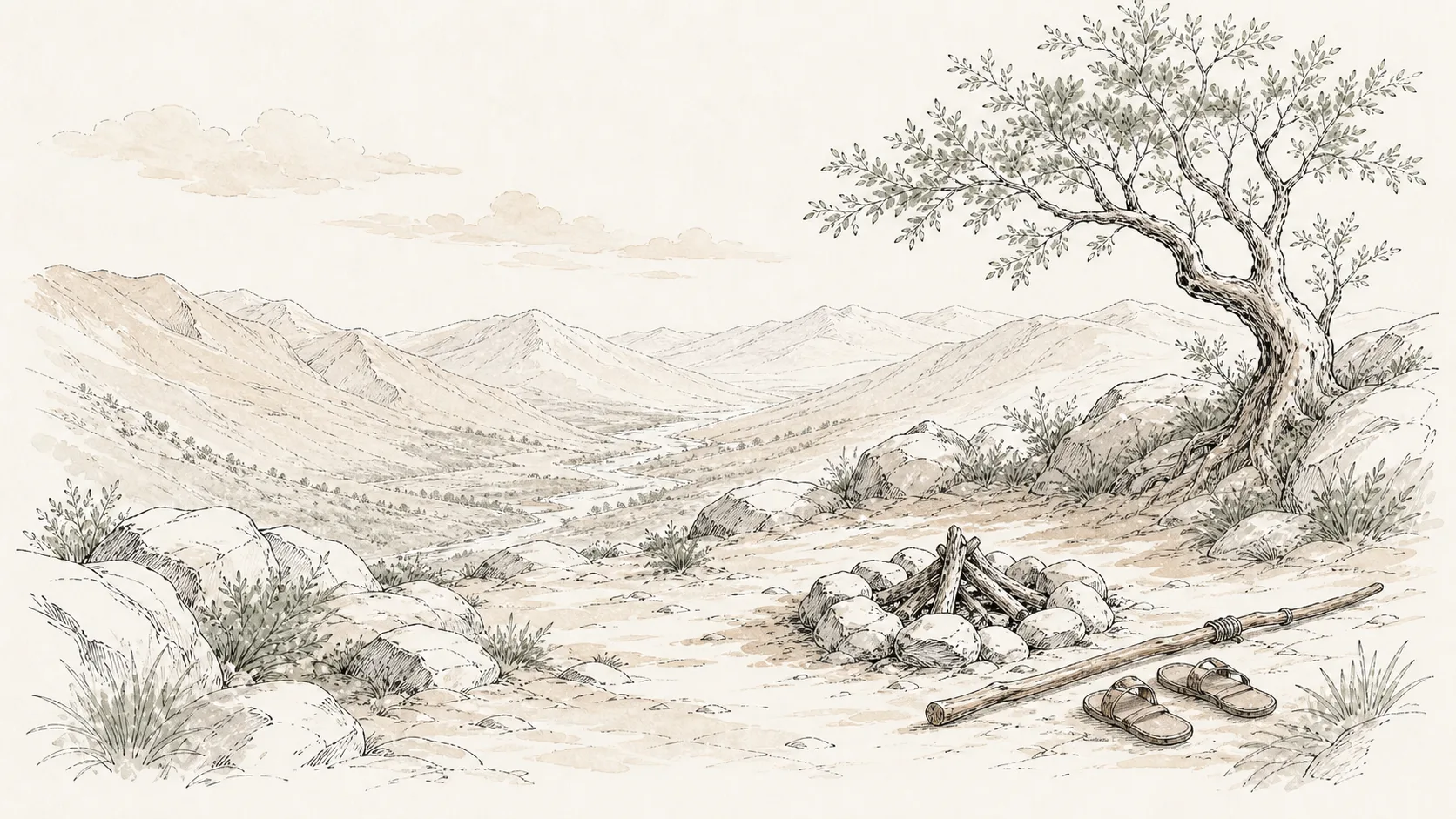
Traveling with his family, Musa notices a fire on the side of the mountain. In the sacred valley he is addressed, shown signs, and commanded to go to Pharaoh, who has exceeded all bounds.
Musa names his fear and asks for ease, clarity of speech, and the support of his brother Harun. He is told not to fear and to speak gently, carrying both the warning and the promise that Allah is with them, hearing and seeing.
Quran-grounded account
Follow the cited narrative
A light on the journey
After completing his time in Madyan, Musa travels with his family and notices a fire near the mountain. He tells them to wait while he goes toward it, hoping to bring news of the road or a burning branch for warmth. When he reaches the fire, he is called from the blessed side of the valley. He is told that he stands in the sacred valley of Tuwa, that Allah has chosen him, and that he should listen to what is revealed.
Signs placed in his hands
Musa is commanded to worship Allah and establish prayer for His remembrance. The Hour is coming, though its time remains hidden, so every soul may be repaid for what it strives toward. Asked about the staff in his hand, Musa explains its ordinary uses. When he casts it down, it moves like a serpent; when he takes it again, it returns to its former state. His hand is also shown as another sign, coming out white and unharmed.
Fear honestly named
The mission is to go to Pharaoh, who has exceeded all bounds. Musa does not pretend that the task is easy. He asks for his chest to be expanded, his work made easier, and the knot in his tongue loosened so his words will be understood. He asks that his brother Harun be appointed to support him. Elsewhere he also remembers the man he had killed and fears retaliation. Allah answers his requests and reminds him that he has already been cared for through earlier dangers.
A gentle word before a tyrant
Musa and Harun are told to go together with the signs and not become weak in remembering Allah. Even before Pharaoh, they are instructed to speak gently, so that he might take heed or become mindful. They fear that he may act hastily against them or grow still more oppressive. Allah tells them not to fear: He is with them, hearing and seeing. The calling therefore begins with signs, prayer, companionship, truthful fear, and confidence in divine presence.
Three moments to notice
Follow the movement
- The valleyAn ordinary need for fire opens into revelation.
- The requestMusa answers a calling by honestly naming what he needs.
- The missionCourage begins with presence, not the absence of fear.
Editorial reflection
A question the story leaves open
The scene honors human limitation while refusing paralysis. Musa is given signs, companionship, and a form of speech appropriate even before a tyrant.